The 5G Revolution: Impacts on Industry and Daily Life
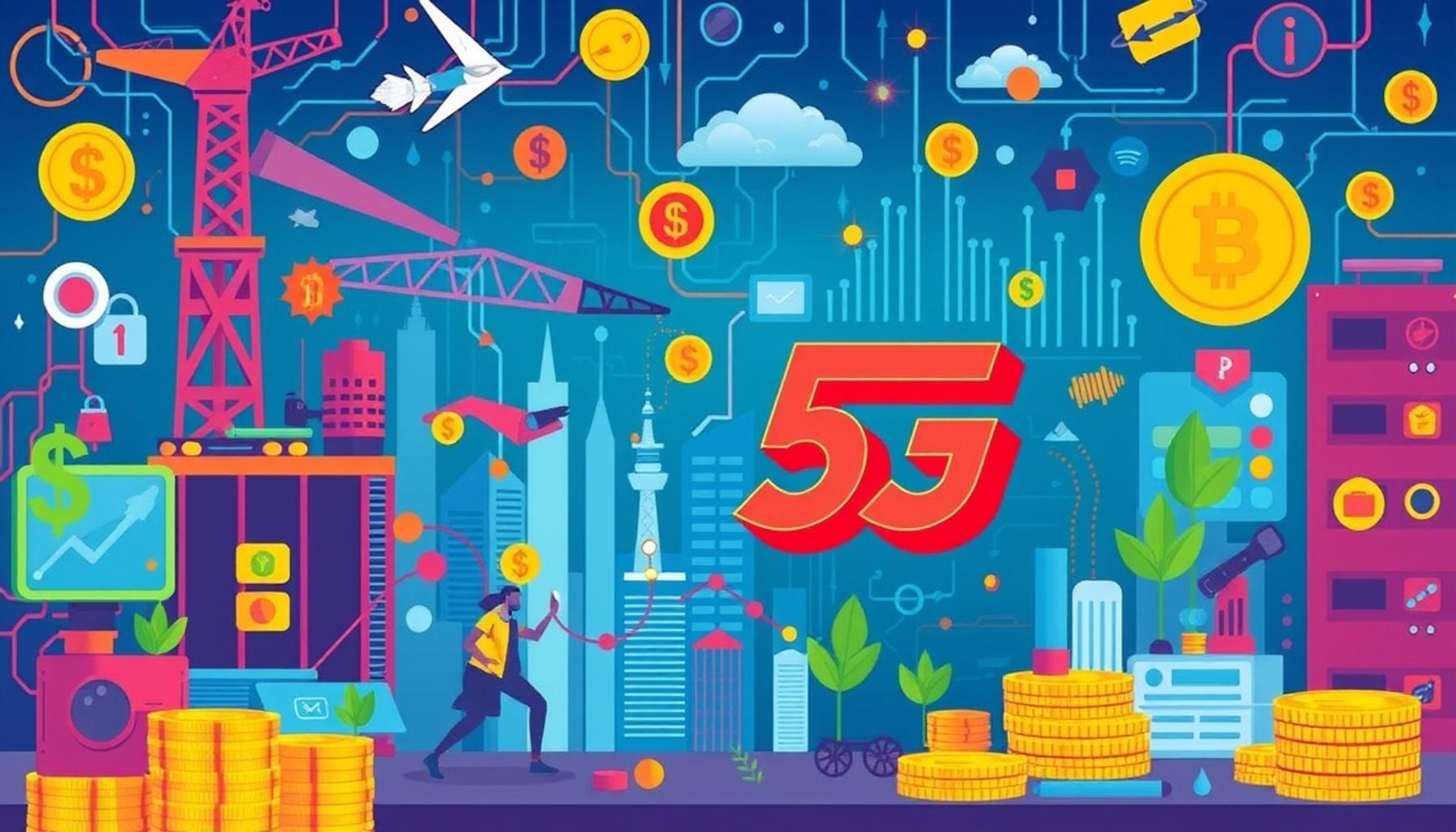
Transforming Communication and Connectivity
The world stands on the threshold of a technological revolution that promises to substantially alter our everyday experiences. The rollout of 5G technology is not merely an upgrade from its predecessor 4G; it represents a fundamental leap forward in wireless communication capabilities. As we delve into this new era, it is essential to understand how these advancements will reshape both industries and our personal lives.
One of the most compelling features of 5G is its faster speeds. This technology can deliver download speeds up to 100 times faster than the current 4G networks. For instance, while a 4G connection might take several minutes to download a high-definition movie, 5G could reduce this time to mere seconds. This speed opens up new avenues for streaming high-quality content and engaging in bandwidth-intensive applications.
Another significant advantage is low latency, which refers to minimal delay in communication between devices. With latencies reduced to as low as 1 millisecond, activities such as online gaming and virtual reality will become seamless experiences. Imagine playing a multiplayer game where actions are reflected in real-time, enhancing competitive play and overall enjoyment.
Moreover, 5G supports massive connectivity, allowing thousands of devices to connect simultaneously without diminishing network performance. This capability is a game-changer for the Internet of Things (IoT), which encompasses smart homes, wearable devices, and smart city infrastructure. For example, in a smart city, sensors on traffic lights can communicate with vehicles to optimize traffic flow, reducing congestion and improving travel times.
Impact on Various Sectors
The ramifications of 5G technology extend far beyond mere speed and connectivity, significantly impacting various sectors. In healthcare, 5G enables innovations such as remote surgeries, where specialists can operate on patients from miles away, utilizing robots controlled in real time over a secure network. Additionally, real-time monitoring of patients with chronic conditions through connected devices can be streamlined, allowing for timely interventions by healthcare providers.
In the realm of transportation, the implications are equally profound. 5G will facilitate the development of autonomous vehicles that can communicate with each other and their environment, making roads safer and more efficient. Imagine a future where cars can react instantaneously to road conditions or communicate to prevent accidents.
Manufacturing will also experience a transformation, thanks to enhanced automation driven by 5G connectivity. Factories equipped with smart machinery can monitor production lines in real-time, improving efficiency and reducing downtime through predictive maintenance. This not only saves time and resources but also enhances product quality.
Social Implications and Daily Life
As we consider the technological advancements brought forth by 5G, it is equally important to reflect on the social implications. Our daily interactions, work environments, and leisure activities are set to shift dramatically. For instance, remote work has gained prominence, and with 5G, employees can engage in high-definition video conferencing without the disruptions experienced with slower networks. Collaborative projects across cities or even countries will become more cohesive and efficient.
Leisure activities, such as gaming, streaming, and virtual reality experiences, will become richer and more immersive, as users enjoy lower latency and higher quality content. The social fabric of our lives may evolve, as this reliable and speedy Internet access facilitates new forms of connectivity and community building.
In conclusion, the advent of 5G technology heralds a new era of communication and connectivity that will bring about not only major advancements in diverse industries like healthcare, transportation, and manufacturing but also reshape how we interact in our daily lives. Embracing this change requires openness and adaptability as we navigate the enhancements and challenges that lie ahead.
DIVE DEEPER: Click here to uncover the challenges and solutions
Revolutionizing Industries and Services
The introduction of 5G technology is set to revolutionize various industries, providing them with unprecedented opportunities for growth and innovation. From healthcare to agriculture, this next-generation connectivity will enhance efficiency and allow for the implementation of advanced technologies that were previously infeasible.
In the healthcare sector, 5G enables real-time data transmission, which is crucial for telemedicine and remote monitoring. For example, wearables that track patients’ health metrics can send updates instantly to healthcare providers. If a patient’s heart rate drops unexpectedly, doctors can respond quickly, potentially saving lives. Furthermore, with 5G, doctors can perform diagnostic imaging and diagnostics with unparalleled speed and clarity, reducing wait times for both patients and healthcare facilities.
The effect of 5G on manufacturing is equally transformative. Smart factories powered by 5G allow machines and devices to communicate continuously with one another, optimizing workflow. An automated assembly line can detect bottlenecks in production and adjust operations without human intervention. This capability enhances productivity and minimizes waste, leading to a significant reduction in costs. Businesses that leverage these advancements can offer higher-quality products at competitive prices, giving them a substantial market edge.
Moreover, in the realm of transportation, 5G technology paves the way for innovations in logistics and supply chain management. For example, companies can use real-time data to track shipments, monitor vehicle conditions, and reroute deliveries to avoid delays. With the advent of connected vehicles, transportation of goods becomes more efficient as trucks can communicate with traffic signals, adjusting their routes based on current road conditions. This kind of integration not only streamlines logistics but also contributes to reducing emissions by optimizing travel routes.
Key Benefits of 5G in Various Sectors
The benefits of 5G can be broken down into several key aspects:
- Enhanced Speed: Dramatic improvements in data transmission speeds facilitate quicker decision-making.
- Low Latency: Near-instantaneous response times are critical for applications requiring real-time feedback, such as autonomous vehicles.
- Massive Connectivity: The ability to connect a vast number of devices without performance degradation supports the growing landscape of IoT.
- Robust Security: Enhanced encryption and security protocols protect sensitive data across industries.
These elements not only transform existing industries but also create new business models and markets. As organizations increasingly adopt 5G-enabled technologies, they will find novel ways to enhance customer experiences and drive innovation. Companies that adapt to these changes sooner rather than later will likely find themselves at the forefront of their respective sectors.
As we explore the implications of 5G, it becomes evident that its integration into daily operations and services is not just an upgrade; it signifies a paradigm shift. Embracing these technological advancements necessitates a willingness to rethink traditional approaches and inspect potential challenges that may arise as industries transition into this new era of connectivity.
DISCOVER MORE: Click here for tips on getting free products from Shein
Transforming Daily Life
In addition to its profound effects on industries, 5G technology is also poised to significantly enhance daily life for individuals across the globe. Whether it is improving entertainment experiences, personal connectivity, or smart home functionality, the implications of 5G will touch nearly every aspect of everyday existence.
One of the most visible changes will occur in the entertainment sector. With faster data speeds, streaming services will offer high-definition content with minimal buffering, ensuring that viewers have an uninterrupted experience. Imagine hosting a movie night with friends while streaming a blockbuster film in 4K resolution, or enjoying live sports events in real-time with virtual reality (VR) enhancements. 5G will allow for the integration of augmented reality (AR) applications, providing viewers with interactive experiences—like seeing player statistics overlaid on the screen during a game, which adds a new dimension to how fans engage with sports.
The impact of 5G on communication is equally significant. With the proliferation of smart devices, maintaining seamless connection among various gadgets becomes essential. 5G will support a large number of devices connected simultaneously, meaning families can make video calls, stream music, and play online games concurrently without sacrificing performance. This will be especially beneficial in households that heavily rely on connectivity for both work and leisure activities. As remote work becomes more commonplace, high-quality video conferencing will be essential to maintain productivity and collaboration among teams.
Furthermore, the advent of smart homes is becoming increasingly tangible with the rollout of 5G. Homeowners will be able to connect their appliances, security systems, and energy management devices to a unified network. For example, smart thermostats can analyze data and adjust heating and cooling based on user habits, optimizing energy use and reducing costs. A 5G-enabled security system may allow homeowners to monitor their property in real-time from any location, receiving instant alerts and livestream feeds directly to their smartphones. These innovations not only improve convenience but also contribute to overall energy efficiency, aligning with sustainable living initiatives.
The Role of 5G in Education and Remote Learning
The educational landscape is another area that stands to benefit immensely from 5G technology. With robust connectivity, students and educators can take advantage of remote learning opportunities in ways that were never before possible. Virtual classrooms can facilitate interactive learning experiences, both for K-12 students and those pursuing higher education. Live-streaming lessons and engaging in group projects from different locations can create a more dynamic and inclusive educational environment.
Moreover, institutions can utilize 5G technology to harness data analytics, helping educators understand student performance and engagement in real-time. For instance, if a student struggles with a concept, personalized support can be swiftly implemented, ensuring that no one falls behind. This adaptability will be particularly vital in a diverse learning ecosystem where each student may have unique needs.
As we dive deeper into the possibilities that 5G technology brings, it is clear that the profound changes it facilitates extend far beyond technical upgrades. The potential for enhanced connectivity not only reshapes how industries operate but also enhances the quality of life for individuals, changing the way we view entertainment, communication, home living, and education. With each advancement, society edges closer to a more connected and efficient way of living.
DIVE DEEPER: Click here to uncover the full guide
Conclusion
In conclusion, the 5G revolution represents a significant leap forward, touching virtually every aspect of our lives and transforming industries in unprecedented ways. From enhancing entertainment experiences with seamless streaming and interactive content to reshaping communication by enabling simultaneous connections among countless devices, the impact is profound. As we embrace smart home technologies, the convenience and efficiency brought about by 5G will redefine the relationships we have with our living spaces, fostering an environment that responds intuitively to our needs.
The educational sector, too, stands on the brink of a transformation, as 5G facilitates remote learning experiences that are more inclusive and engaging. By allowing real-time data analytics, educational institutions can better support individual student needs, ensuring that each learner can thrive in a rapidly changing landscape.
Ultimately, the convergence of 5G technology with our daily lives introduces a new paradigm of connectivity that promotes efficiency, accessibility, and innovation. As businesses adapt to these changes, they will not only increase productivity but also contribute to sustainable practices and improved customer experiences. It is essential for consumers, industries, and policymakers to recognize the immense potential of 5G and work collaboratively to navigate this exciting new frontier responsibly. Embracing these advancements will ensure that the benefits of the 5G revolution are enjoyed by all, paving the way for a more interconnected and dynamic future.

Linda Carter
Linda Carter is a writer and expert known for producing clear, engaging, and easy-to-understand content. With solid experience guiding people in achieving their goals, she shares valuable insights and practical guidance. Her mission is to support readers in making informed choices and achieving significant progress.